FIFA World Cup standings, results and stats
FIFA World Cup standings are the heartbeat of the tournament. Once the FIFA World Cup 2026 kicks off on 11 June, every group's table updates after each match, the third-placed table shapes the Round of 32, and tournament stats accumulate fast — goals, assists, possession, expected goals and more. This page tracks live tables across all 12 groups, breaks down the format, and explains how matches are scored, ranked and tiebroken.
How the group tables work in 2026
The point system in 2026 follows the same rule used since 1994: three points for a win, one for a draw, zero for a defeat. With 12 groups of four teams, each side plays three group matches. The top two positions in each group qualify directly for the Round of 32; the eight best third-placed teams across the 12 groups also advance.
| Position | Outcome | Notes |
|---|---|---|
| 1st in group | Round of 32 — favourable seed | Faces a third-placed side or weak runner-up |
| 2nd in group | Round of 32 — middle seed | Faces a group winner or third-placed side |
| 3rd in group (top 8) | Round of 32 — wildcard | Eight of 12 third-placed teams advance |
| 3rd in group (bottom 4) | Eliminated | Four worst third-placed sides go home |
| 4th in group | Eliminated | All 12 fourth-placed teams are out |
FIFA World Cup standings: tiebreakers in detail
When two or more teams finish level on points in the group tables, FIFA applies a multi-step tiebreaker. The order is the same one used since 2018, with one key adjustment for 2026: the third-placed team rankings are compared across all 12 groups, not just within the same group.
- Greatest number of points in all group matches.
- Goal difference across all group matches.
- Number of goals scored across all group matches.
- Head-to-head points between the tied teams.
- Head-to-head goal difference between the tied teams.
- Head-to-head goals scored between the tied teams.
- Fair-play points — based on yellow and red cards.
- FIFA Ranking at the start of the tournament.
Goal difference is by far the most decisive of these tiebreakers. In Qatar 2022, six of eight groups saw goal difference separate teams who finished level on points. Expect the same in 2026 — a 1–0 win is rarely enough to top a group; a 3–0 demolition can swing a tournament.
FIFA World Cup matches: how results feed the table
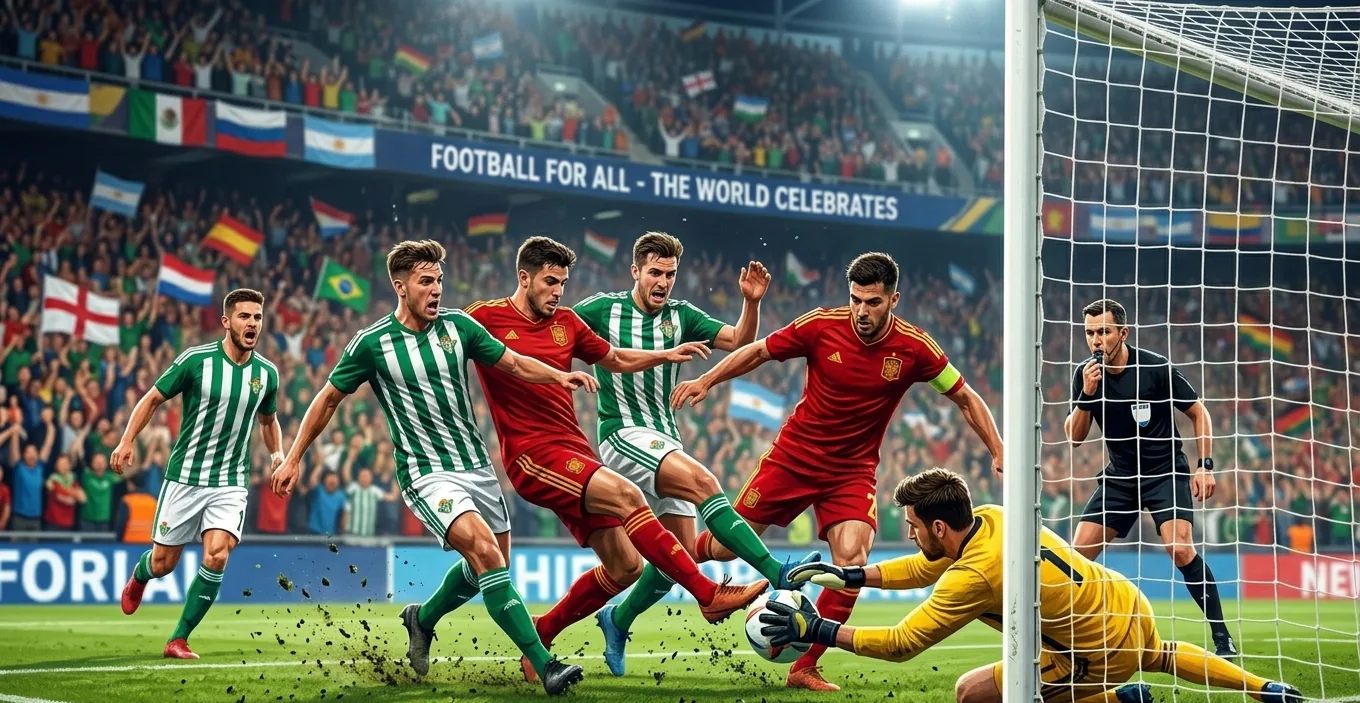
Every one of the 72 group-stage FIFA World Cup matches feeds directly into the standings. Three matches per group, played over Matchday 1 (11–17 June), Matchday 2 (18–22 June) and Matchday 3 (23–27 June). FIFA World Cup matches in the same group on Matchday 3 always kick off simultaneously, preventing teams from gaming results based on earlier scores.
FIFA World Cup 2026 matches use the latest officiating standards: VAR is in operation throughout, semi-automated offside detection is active at every venue, and concussion substitutes are permitted. Match data — possession, expected goals, pass maps, distance covered and pressing intensity — is published in near-real-time through FIFA's official platforms and feeds directly into post-match FIFA World Cup stats.
Tracking FIFA World Cup games during the tournament
FIFA World Cup games are played daily during the group stage, with match windows roughly four hours apart in U.S. and Canadian time zones. The fastest way to track multiple games at once is to follow the FIFA app, which pushes live score notifications, lineup announcements and goal alerts. For deeper FIFA World Cup stats, broadcaster apps (FOX in the U.S., TSN in Canada, BBC iPlayer in the UK) layer expected-goals charts and advanced metrics over their match feeds.
FIFA World Cup stats and awards
FIFA World Cup stats tracked across the tournament feed several end-of-tournament awards: the Golden Boot for top scorer, the Golden Ball for best player, the Golden Glove for best goalkeeper, the Young Player Award (under-21), and the Fair Play Trophy for the most disciplined squad. The Golden Boot is determined by goals first, then assists, then minutes played as tiebreakers — a quirk that has decided the award in five of the last seven World Cups.
FIFA World Cup stats also feed the official Team of the Tournament. The expected-goals model used by FIFA combines shot quality, defensive contribution and possession-value metrics, generating an objective layer alongside coach selections and journalist votes. Top scorer markets are among the most popular betting markets pre-tournament — current odds are tracked on our betting page.
Group tables and the Round of 32 path
The eight best third-placed positions advance to the Round of 32 — meaning a team can lose two of three matches and still progress, provided their goal difference holds. In past 32-team tournaments using the 24-team formula (1986, 1990, 1994), this rule produced some memorable underdog runs. In 2026, with 12 groups producing 12 third-placed teams competing for eight spots, expect razor-thin margins.
Once group standings are confirmed, the Round of 32 pairings are decided by FIFA's published lookup table — group winners face third-placed sides or runners-up, with seeding favouring teams that topped their groups. Track the live bracket on the brackets page, see how the 12 groups were assembled at the draw page, and use our qualifiers page for the routes each team took to the tournament.
Historical points-table benchmarks
Historical results show a clear pattern: seven points (two wins, one draw) almost always tops a group; five or six points often wins a group with a strong goal difference; four points (one win, one draw, one loss) is usually enough for second place but never first; three points (one win) qualifies as a third-placed side roughly half the time. In 2026, with the new format, four points is now likely to qualify as a third-placed team, lowering the bar slightly compared to past tournaments.
Frequently asked questions
Where can I see live FIFA World Cup standings?
How are FIFA World Cup standings tiebreakers decided?
How many FIFA World Cup games are played in 2026?
What FIFA World Cup stats are tracked during the tournament?
What happens when teams are level on points in FIFA World Cup standings?
Follow every group, every match, every standing
Standings change with every kick. SpinBetter's live in-play markets move with them — and the welcome offer is locked in when you open an account.
Bet Live Markets